
The right solution for monitoring multiple client networks is a multi-tenant monitoring platform that enforces tenant isolation, provides RBAC and templated operations, and supports probe or edge data collection with AI-assisted anomaly detection. That combination is what lets an MSP run hundreds of client networks from one screen without one tenant ever seeing another's data.
A platform built for this job gives you:
- Scale without headcount growth — templated onboarding replaces manual per-client setup.
- Lower operational overhead — one control plane, one upgrade path, one place to look.
- Tenant-scoped reporting — each client sees only their own dashboards and SLA data.
- Strict data segregation — RBAC and logical isolation prevent cross-tenant exposure.
See the Netverge section below for how one platform satisfies all four requirements at once.
Key Takeaways
Multi-tenant network monitoring succeeds when tenant isolation, RBAC, templated operations, and AI-assisted detection work together as one system rather than as separate bolted-on tools.
| Point | Details |
|---|---|
| Isolation is non-negotiable | Test mock tenant separation directly rather than trusting a vendor's claim on a slide. |
| Templates scale faster than dashboards | Standardized monitoring profiles prevent the configuration drift that overwhelms technician headcount. |
| RBAC needs front-end enforcement | Scoped roles and logged switch-user actions matter as much as backend data segregation. |
| Edge-first collection improves accuracy | Probe or Vergepoint-style hardware at client sites gives a true endpoint perspective on latency and jitter. |
| Netverge unifies the checklist | Its AI-driven knowledge graph, Vergepoints, and tenant-scoped RBAC map directly to the buyer criteria in this guide. |
Table of Contents
- What Multi-Tenant Network Monitoring Means for MSPs
- Core Feature Checklist Every MSP Needs
- Architecture and Deployment Patterns That Scale
- Operational Best Practices for MSPs
- Security, Compliance, and Tenant Isolation Controls
- How to Evaluate and Select a Multi-Tenant Monitoring Platform
- How Netverge Maps to the Checklist
- Editorial Take: Why Templates Matter More Than Dashboards
- Get Tenant Isolation and AI-Assisted Monitoring in One Platform
- Sources
What Multi-Tenant Network Monitoring Means for MSPs
Multi-tenant network monitoring is an architecture where a single monitoring platform serves multiple independent clients, or "tenants," each with data, dashboards, and permissions walled off from the others. Every tenant gets its own portal view, but the provider runs one shared control plane behind the scenes.
That shared control plane is the whole point. As Cisco explains, multi-tenant SD-WAN and monitoring systems let MSPs manage many customers from a single GUI using shared controllers and tenant portals, which centralizes policy pushes and software upgrades instead of repeating them per client.
Single-tenant models, by contrast, mean:
- A separate server or instance per client, multiplying licensing and maintenance costs.
- Manual, one-off upgrade cycles instead of a single rollout across your entire book of business.
- No unified view when a technician needs to triage issues across ten clients at once.
Core Feature Checklist Every MSP Needs
Not every "multi-tenant" label on a vendor's homepage means the same thing. Before you sign anything, map the platform against this checklist:
- Tenant isolation and data segregation. Each client's telemetry, configuration, and history must be logically walled off, not just filtered by a dashboard toggle.
- Role-based access control (RBAC) with switch-user support. Technicians should hold tenant-scoped roles, and admins need a clean way to jump between tenant contexts without full credential swaps.
- Centralized dashboard with drilldowns. You need one pane of glass for your team and a separate, simplified customer-facing view for each client.
- Automated discovery and templated onboarding. New sites should inherit standard monitoring profiles automatically, not get built by hand.
- Alerting and SLA reporting. Alerts need tenant-aware routing, and reports should generate per client without manual filtering.
- Agent and agentless flexibility, plus open APIs. eG Innovations notes that both approaches show up in real MSP deployments, agents for deep diagnostics, probes for a true endpoint perspective, and both need to plug into your existing ITSM stack.
Pro Tip: Ask any vendor to demo tenant-scoped reporting live, not in a slide deck. If they can't spin up a mock second tenant and show you isolated data in under five minutes, that's a sign the isolation is cosmetic.
Architecture and Deployment Patterns That Scale
How a platform collects data determines how well it scales past a handful of tenants. Two patterns dominate serious MSP deployments.
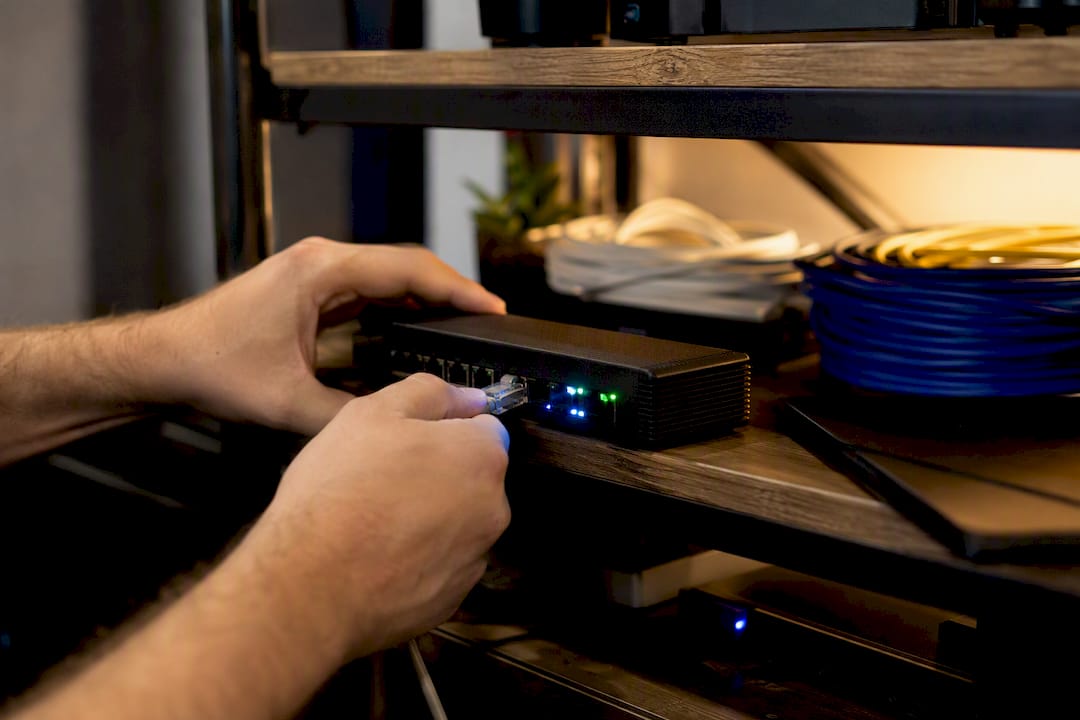
Probe-central, edge-first collection places lightweight hardware or agents, similar to Netverge's Vergepoints, at each client site. This preserves data locality and gives you metrics from the actual endpoint's perspective rather than an inferred estimate from a central poller. Research on decentralized, AI-enabled multi-tenant monitoring shows edge collectors commonly feed dedicated per-client instances (small on-prem devices tied to isolated data stores) that report up to a central analytics layer, or "knowledge plane".
SD-WAN multitenancy relies on shared controllers and tenant portals, giving each client per-tenant policy and visibility while the provider manages one underlying fabric, the same model Cisco describes for centralized policy and upgrade management.
When should you decentralize versus centralize? A few signals matter:
- Client networks with restricted inbound access or strict firewall policies favor local probes reporting outward.
- Bandwidth-constrained sites benefit from edge aggregation rather than streaming raw telemetry.
- Secure transport, encrypted channels or VPN tunnels, is non-negotiable regardless of which pattern you pick.
Operational Best Practices for MSPs
Multi-tenancy only pays off if your operations scale with it. That means treating configuration as a repeatable template, not a bespoke build for every client.
- Build templated monitoring profiles. Standard thresholds, alert rules, and report formats should push to new tenants automatically. Practitioner guidance from QRvey is blunt about this: without templates, each client's custom setup creates configuration drift that eventually requires more staff than the contract can support.
- Automate agent and probe deployment. Registration should happen through orchestration, not a technician manually configuring each device.
- Standardize alert routing per tenant. Escalation paths need to route to the right team or client contact without manual reconfiguration each time.
- Define a lifecycle for tenant changes. Adding, updating, or decommissioning a tenant should follow a documented, repeatable procedure.
Pro Tip: Write your tenant decommissioning checklist before you need it. Half-removed tenants left in a monitoring system are a common source of stale alerts and confused billing months later.
Security, Compliance, and Tenant Isolation Controls
Strict segregation is not a feature you bolt on later. It has to be designed into the platform from day one, especially once you're subject to frameworks like GDPR or HIPAA that require demonstrable data separation between clients.

The BigComp 2024 research on decentralized, AI-enabled multi-tenant monitoring found that architectures combining edge collectors with a central knowledge plane cut network element downtime by up to 95% and incident resolution time by up to 90% in their tested deployment.
The controls that make this possible:
- Logical separation by design. Use per-tenant sites with nicknames or unique IDs, since IPs get reused across separate client networks. eG Innovations points out that strict designs avoid relying on IP as a primary identifier for exactly this reason.
- Least-privilege RBAC. Microsoft's Entra governance guidance treats front-end access failures, a junior tech seeing another tenant's console, as seriously as backend data leaks.
- Encrypted telemetry transport. Consider proxy authentication methods or VPN tunnels for any data crossing public networks.
- Webhook and ITSM reconfiguration. Enabling multi-tenancy often means revisiting existing integrations so alerts route with tenant context intact.
How to Evaluate and Select a Multi-Tenant Monitoring Platform
Vendor demos tend to look impressive and mean little until you press on specifics. Run every serious candidate through these steps:
- Test isolation directly. Create a mock second tenant and confirm data, alerts, and dashboards stay fully separated.
- Verify RBAC granularity. Ask whether roles can be scoped to a single tenant, and whether switch-user actions are logged.
- Check templating depth. Can you push a monitoring profile to fifty new sites in one action, or does each need manual setup?
- Confirm integration reach. Does it connect to your RMM and PSA tools, and does it expose a documented API?
- Ask sizing questions. Devices per tenant, polling frequency, data retention windows, and projected storage growth all affect real cost.
- Understand the pricing shape. Per-device, per-tenant, and tiered models each shift your margin differently as you add clients, so request a written breakdown before you commit.
Red flags worth walking away from: no tenant-scoped reporting, no way to automate onboarding, or RBAC that only separates data at the dashboard filter level instead of the database level.
How Netverge Maps to the Checklist
Netverge was built around the exact checklist above, not retrofitted to it. The platform pairs AI-driven anomaly detection with a knowledge graph that correlates events across tenants, so an ISP-wide outage affecting several clients gets flagged as one root cause instead of a dozen separate tickets.
On the ground, Vergepoints handle edge-first data collection at client sites, feeding a central console where templated configuration rollouts push standard monitoring profiles to new tenants automatically. RBAC and tenant-scoped dashboards keep each client's view isolated, while your team retains the switch-user access needed to triage across accounts.
A platform that combines probe-central data collection with AI-assisted correlation doesn't just monitor more networks. It changes how fast your team can tell the difference between a single site hiccup and a shared infrastructure failure.
For a closer look at how the pieces fit together, the Netverge MSP overview walks through tenant management, dashboards, and onboarding workflows in more depth.
Editorial Take: Why Templates Matter More Than Dashboards
Most buying guides for this category obsess over dashboard aesthetics and alert counts. That's the wrong place to focus. The research on decentralized, AI-enabled monitoring backs this up: the deployments that cut downtime and resolution time dramatically weren't winning because of prettier interfaces. They won because templated operations and edge-first collection removed manual work from the loop before AI ever touched the data.
Conventional advice tells MSPs to prioritize feature lists. I'd argue you should prioritize your own onboarding process first. A platform with mediocre visualization but airtight templating will scale further than a gorgeous dashboard bolted onto a manual setup process. RBAC gets treated as a checkbox item too often, when Microsoft's own governance guidance makes clear that front-end access mistakes cause as much damage as backend leaks.
If you take one thing from this guide, test templating and RBAC granularity before you even look at the dashboard. Everything else is secondary to whether the platform can grow with your tenant count without growing your headcount at the same rate.
— Jim
Get Tenant Isolation and AI-Assisted Monitoring in One Platform
Netverge gives MSPs the probe-central architecture, templated onboarding, and RBAC-scoped dashboards this guide just walked through, built into one system instead of stitched together from separate tools.
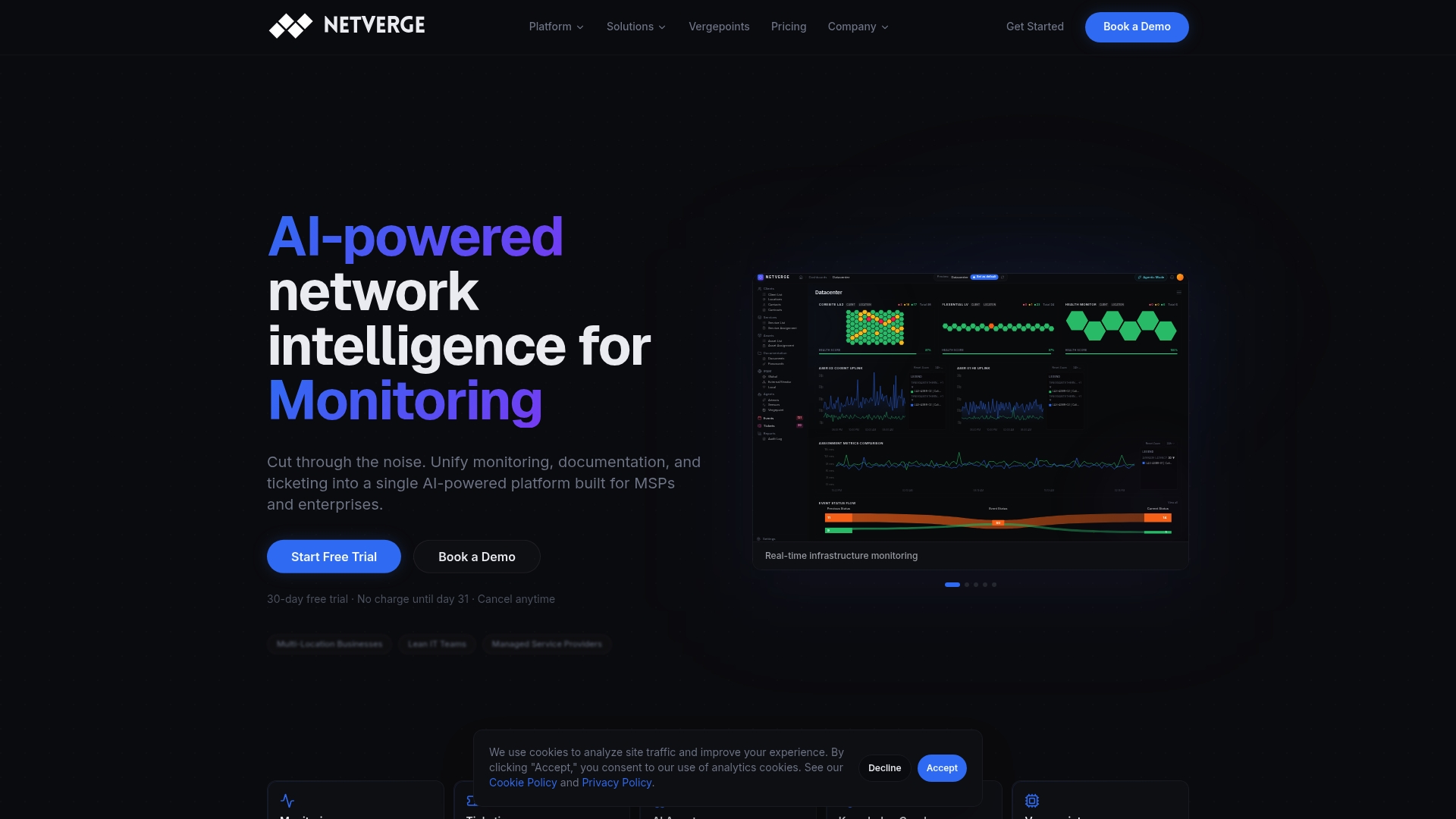
Where a lot of platforms make you choose between edge visibility and centralized control, Netverge's Vergepoints handle on-site data collection while the AI-powered knowledge graph correlates events across your entire tenant base, so a shared infrastructure failure gets caught once instead of triggering a dozen isolated tickets. Templated configuration rollouts mean a new client site inherits your standard monitoring profile automatically, and tenant-scoped RBAC keeps every client's data exactly where it should stay.
If you're evaluating platforms against the checklist in this guide, the fastest way to see how Netverge holds up is to look at the AI-powered monitoring platform directly and request a demo built around your own tenant structure.
Sources
- What is multi-tenancy? - Cisco
- Empowering Managed Service Providers: Decentralised AI-Enabled Monitoring in Multi-Tenant Networks (BigComp 2024)