
Every MSP running more than a handful of clients needs tenant-aware, least-privilege RBAC built on time-bound delegated access rather than standing admin rights. Enable Granular Delegated Admin Privileges (GDAP) or subaccount roles wherever your tools support them, enforce MFA on every technician account, and centralize group management in your partner tenant. Success looks like this: fewer shared admin logins, a clean audit trail for every privileged action, and a smaller blast radius when one account gets compromised.
TL;DR:
- MSPs should use time-bound, role-specific GDAP or subaccount roles to minimize shared admin accounts and improve audit trail accuracy.
- Implementing centralized identity and tenant-level authorization helps prevent privilege creep and keeps access management scalable at larger client bases.
- Regular automated reviews of access logs and group memberships are essential for maintaining least privilege and avoiding hidden privilege escalation.
- Role definitions must be based on job functions, with incremental access granted only as needed for training and tenure, and offboarding processes should be immediate and well-documented.
- Using a unified platform like Netverge can streamline RBAC workflows, improve visibility, and reduce manual tasks during onboarding, escalation, and offboarding.
Table of Contents
- Core Concepts Behind RBAC for MSPs
- How to Implement RBAC Across MSP Workflows
- Governance: Stopping Privilege Creep Before It Scales
- How Netverge Supports RBAC-Aware MSP Operations
- What Actually Determines the Right RBAC Posture
- Get Your RBAC Workflows Running on Netverge
- Where to Verify RBAC Policy and Audit Requirements
- Sources
- FAQ
Core Concepts Behind RBAC for MSPs
RBAC for MSPs means assigning permissions by job function rather than by person, then delegating that access into customer tenants only for as long as the work requires. CISA's advisory on MSP threats frames this as a blast-radius problem: one compromised technician account with standing Global Admin rights across dozens of tenants is the single scenario attackers exploit most in lateral-movement attacks.
Microsoft's shift from legacy Delegated Admin Privileges (DAP) to Granular Delegated Admin Privileges changed the baseline. GDAP grants time-bound, customer-approved access scoped to specific workloads instead of persistent tenant-wide control. It also caps you at 100 security groups per customer, a limit that shapes how you design roles long before you hit it.
Authentication and authorization solve different problems, and MSPs that conflate them build fragile systems. Centralized identity, like Microsoft Entra ID or another SSO provider, handles who a technician is. Tenant-level authorization decides what that verified technician can actually touch inside a given customer environment. NIST's cloud access control guidance recommends exactly this hybrid split: one identity layer, many scoped authorization policies.
Skip this discipline and the consequences show up fast:
- Shared admin credentials that make it impossible to prove who touched what during an incident.
- Failed compliance audits because access logs show tenant-wide roles instead of task-specific ones.
- Technicians who retain access to former clients months after a contract ends.
How to Implement RBAC Across MSP Workflows
Building role-based access control for MSPs is a sequencing problem more than a technical one. Get the order right and the rest follows.
- Design role definitions from job functions first. Map "helpdesk-l1," "helpdesk-l2," and "network-admin" to specific permission sets, then assign those roles to security groups inside your partner tenant, not to individual users. This normalized taxonomy is what keeps group management centralized as you add customers.
- Request GDAP relationships or configure subaccount roles with expiration dates attached. Every request needs a documented business justification: which technician, which workload, which customer, and for how long.
- Build your ticketing escalation rules around role checks. A Tier 1 technician escalating a ticket that touches Exchange admin functions should trigger an approval step before any elevated action fires, not after.
- Onboard new technicians into the smallest viable security group first. Grant broader access only as tenure and training justify it, and require a Privileged Access Workstation or just-in-time elevation for any task touching customer production systems.
- Offboard immediately, not eventually. Remove security group membership the moment employment ends, pull an access report as audit proof, and reassign that technician's open tickets before the account disappears.
Your runbook template should specify who approves each access request, how long that access lasts, and where the approval gets logged. Skip any one of those three and audits get harder, not easier.
Pro Tip: Build your offboarding checklist before you need it. The MSPs that get burned by a departing technician retaining access almost always improvised offboarding on the day it happened instead of following a pre-written script.
Governance: Stopping Privilege Creep Before It Scales
Privilege creep is what happens when RBAC works fine at ten clients and quietly breaks at fifty. The fix is automated reconciliation between your HR or Active Directory records and the access technicians actually hold, run monthly at minimum and weekly for high-turnover teams.
The 100 security-group limit per customer, set by Microsoft's GDAP architecture, forces discipline whether you plan for it or not. The group-proxy pattern solves this: map a small number of partner-tenant security groups to remote groups inside each customer tenant, so you manage membership centrally without burning through that ceiling one customer at a time. Skip this pattern and you get security-group sprawl, dozens of overlapping groups per customer with no consistent naming and no clear owner.
Route your access logs into a SIEM or a tool like Microsoft Azure Backups — Managed disk snapshot on a schedule so role assignments and privileged actions are searchable, not buried in per-tenant portals. The StopRansomware guide recommends auditing privileged roles on a recurring schedule, and CIS Control 6 puts the floor at annual reviews, though most MSPs handling sensitive workloads audit quarterly.
A short governance checklist worth adopting outright:
- Time-bound roles by default, with expiration dates set at request time, not left open-ended.
- Separation of duties between the technician requesting access and the admin approving it.
- A minimum number of standing Global Admin accounts, ideally two for redundancy and no more.
- PAWs for any technician performing privileged work, separate from their day-to-day email and browsing account.
How Netverge Supports RBAC-Aware MSP Operations
Netverge consolidates monitoring, ticketing, documentation, and automation into one system, which matters because RBAC only holds up when every tool respects the same role boundaries. Role-aware ticket triage routes escalations to the technician tier actually authorized for that workload, instead of defaulting to whoever has the broadest access. Vergepoints give you on-site visibility without handing remote technicians standing admin rights to see what's happening on a client network. The contextual knowledge graph ties documentation to the same role structure your GDAP relationships already define. Pair Netverge's monitoring and automation layer with your existing GDAP setup and centralized identity provider, and privileged exposure drops without adding manual approval steps to every routine task.

What Actually Determines the Right RBAC Posture
Centralize authorization policy wherever consistency matters more than customization, things like MFA enforcement, PAW requirements, and offboarding timelines. Keep enforcement tenant-specific wherever compliance obligations or customer contracts genuinely differ. Automation should handle routine reconciliation and time-bound expirations; a human should still approve anything touching Global Admin or financial systems. For most MSPs, that means hybrid RBAC: one identity backbone, tenant-scoped authorization, and automated reviews doing the tedious work humans skip.
— Jim
Get Your RBAC Workflows Running on Netverge
Netverge replaces the fragmented mix of monitoring dashboards, ticketing systems, and spreadsheet-based access logs most MSPs stitch together, giving you one platform where role-aware automation and network visibility actually talk to each other. That matters most during the exact moments RBAC is supposed to protect: a technician onboarding, an escalation crossing tenant boundaries, an offboarding that needs to happen in minutes, not by end of day.
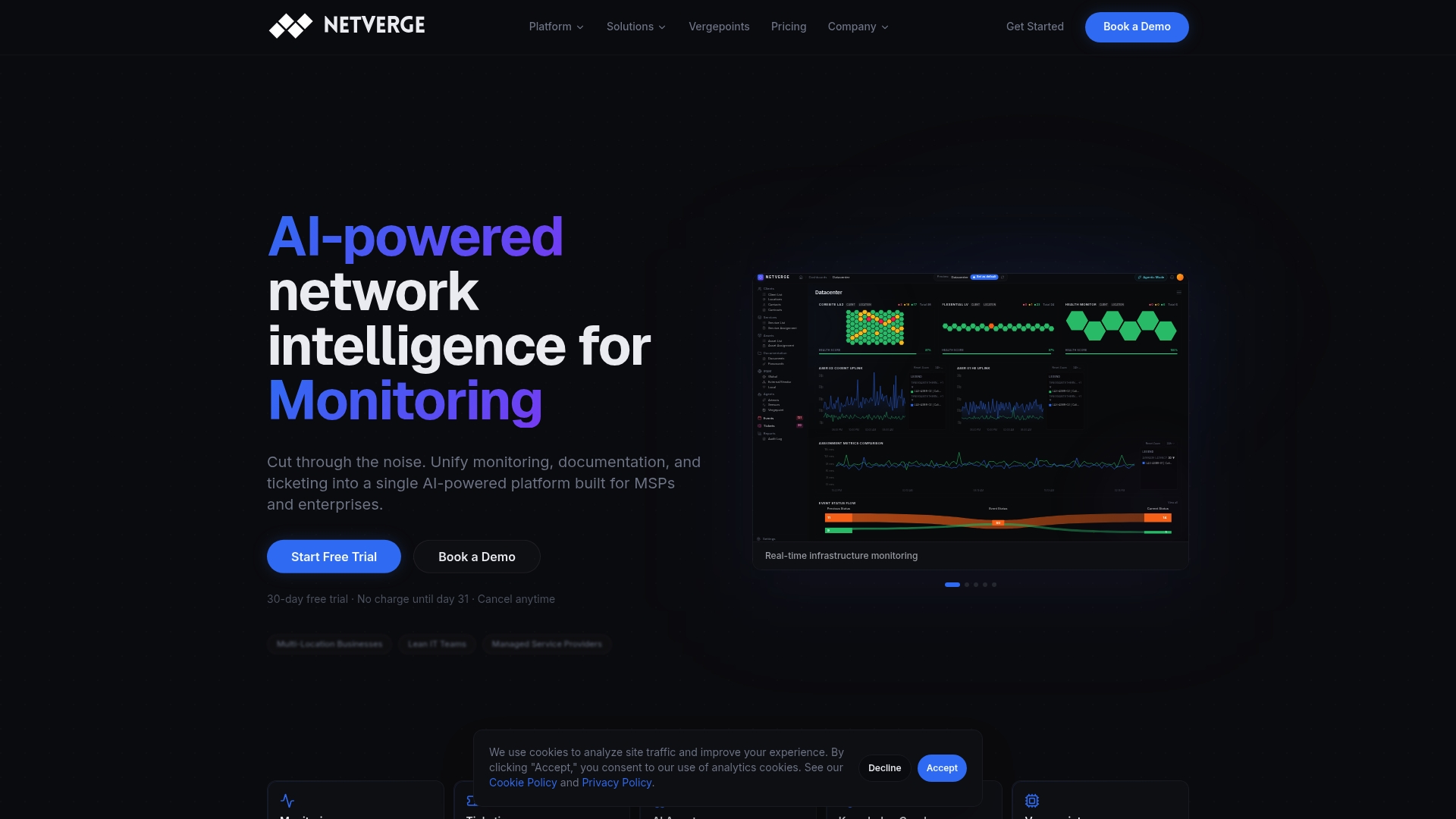
The Starter Package runs $299 per month and gets you the core platform to test role-aware ticket triage against your own GDAP setup. If your environment needs on-site visibility to back up tenant-level access controls, Hardware Vergepoints add $49 per month per device, with the full pricing guide covering additional sensors, clients, sites, and AI agents as you scale. Start a free trial and run your next technician onboarding or offboarding through Netverge to see where your current RBAC workflow has gaps.
Where to Verify RBAC Policy and Audit Requirements
For policy language and audit evidence, go to the primary sources directly. Microsoft's GDAP documentation covers partner relationship structure and the 100-group limit. CISA's MSP advisory and the StopRansomware guide cover hardening and audit cadence.
Sources
- Granular delegated admin privileges (GDAP) introduction - Partner Center | Microsoft Learn
- Protecting Against Cyber Threats to Managed Service Providers and their Customers | CISA
FAQ
Is RBAC or ABAC Better for MSPs?
RBAC fits most MSP environments better because access decisions map cleanly to job functions across many similar customer tenants. Attribute-based access control (ABAC) adds flexibility for complex conditional rules, but it also adds administrative overhead most MSPs don't need when GDAP already scopes access by role and time.
What Are the Three Core Rules of RBAC?
RBAC rests on role assignment, meaning users get permissions only through assigned roles, role authorization, meaning a role must be authorized before it's active, and permission authorization, meaning a role can only exercise permissions it's explicitly been granted. Together these three rules keep access tied to function rather than to individual discretion.
Can I Use RBAC With Microsoft Entra ID?
Yes. Entra ID handles centralized authentication while GDAP and tenant-specific security groups handle authorization, which is the hybrid pattern NIST recommends for cloud environments spanning multiple tenants. Most MSPs map partner-tenant security groups to remote groups in each customer's Entra ID setup using the cross-tenant delegated administration model.
What Is RBAC in Simple Terms?
Role-based access control means giving people permissions based on their job, not granting access one person at a time. A helpdesk technician gets helpdesk permissions, a network admin gets network admin permissions, and nobody ends up with broader access than their role actually requires.
Does Netverge Help With RBAC Implementation for MSPs?
Netverge supports RBAC-aware operations by routing ticket triage and automation through the same role structure your GDAP relationships already define, rather than defaulting technicians to broad access. Pricing details and a free trial are available for MSPs who want to test this against their current access setup.