Handling registration, onsite check-in, badge printing, and analytics for large or hybrid events often forces teams to juggle multiple vendors and patch together workflows. Many event management platforms either gate critical features like onsite operations and integrations behind opaque pricing or do not support global teams with multi-language deployment. This overview compares five event management systems on end-to-end workflow support, onsite tools, analytics, and integration so you can select a platform that fits your event scale and operational demands without committing to a sales call first.
Table of Contents
Zuddl
At a Glance
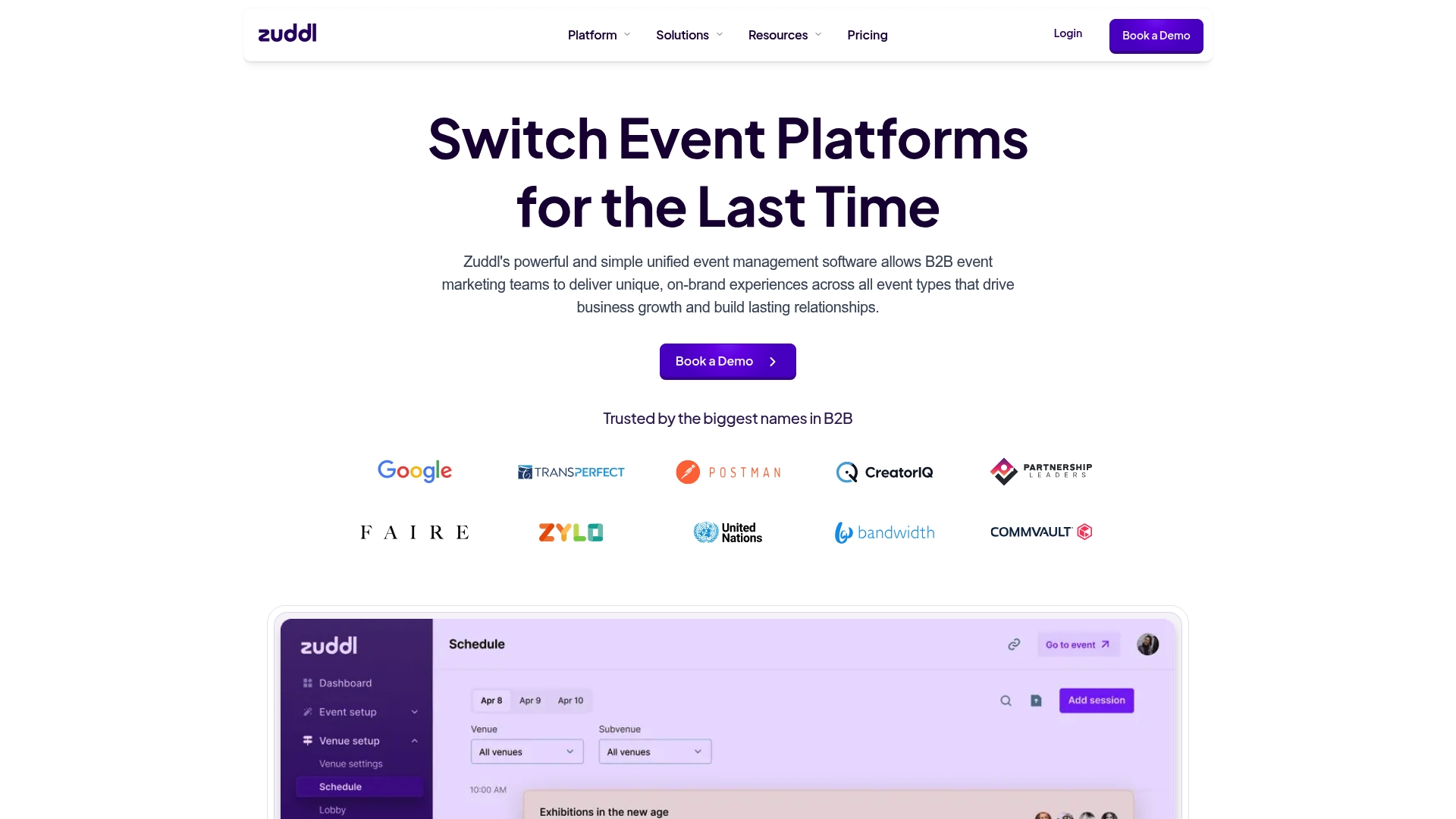
AI agents are built into Zuddl alongside ticketing, onsite check in, exhibitor tools, and live streaming for hybrid events. The platform is pitched at large organizers who want a single system to manage registration, sessions, and analytics without stitching multiple vendors together.
Core Features
Zuddl groups event operations into modules you can combine for virtual, hybrid, or in person programs. It focuses on end to end event workflows rather than single-point tools.
- Ticketing and Registration that handles tiered passes and attendee data capture.
- Onsite Solutions including badge printing and check in for in person flows.
- AI Agents to assist with moderation, routing, and attendee engagement during live sessions.
- Event gamification, mobile event app, speaker and exhibitor management, and event analytics.
Key Differentiator
Zuddl distinguishes itself by packaging customization across the entire event lifecycle with AI assistance for operational tasks. That combination targets enterprise conference teams that want a single vendor for registration, streaming, onsite services, and post event reporting rather than assembling a toolchain.
Pros
Vendor materials and customer stories point to strong video quality for live streaming, which matters for keynote and stage sessions.
The all in one approach reduces the number of vendors to manage, cutting coordination overhead for producers running multi day conferences.
Event Analytics gives consolidated attendee and session metrics so marketing and sales teams can act on leads faster.
Built in exhibitor and speaker management removes the need for separate CRMs for booth and agenda coordination.
AI Agents can automate routine tasks like routing questions and tagging leads, which lowers the manual load on ops teams.
Cons
Several reports indicate the platform can feel slow during peak traffic, which creates risk for high concurrent viewership events.
Initial configuration and setup can be tedious, so expect a nontrivial project plan and technical support time before go live.
Heavy reliance on stable internet means onsite contingencies are required for venues with spotty connectivity.
Some attendees have experienced login or access issues, which raises the importance of thorough pre event testing and help desk staffing.
Who It's For
Large enterprise event teams, trade show producers, and corporate communications groups that run multi track conferences and want to centralize registration, streaming, onsite services, and analytics under one configurable vendor.
Real World Use Case
A multinational firm used Zuddl to run a hybrid annual conference, combining registration, live streaming, exhibitor management, and onsite check in. The team reported tighter coordination between onsite staff and virtual moderators and faster lead handoffs after sessions.
Pricing
Pricing is not explicitly listed on Zuddl's site and appears to vary by modules and event scale. Expect enterprise style quotes with per event or annual licensing and optional add ons for onsite services and custom integrations.
Website: https://zuddl.com
Swoogo
At a Glance
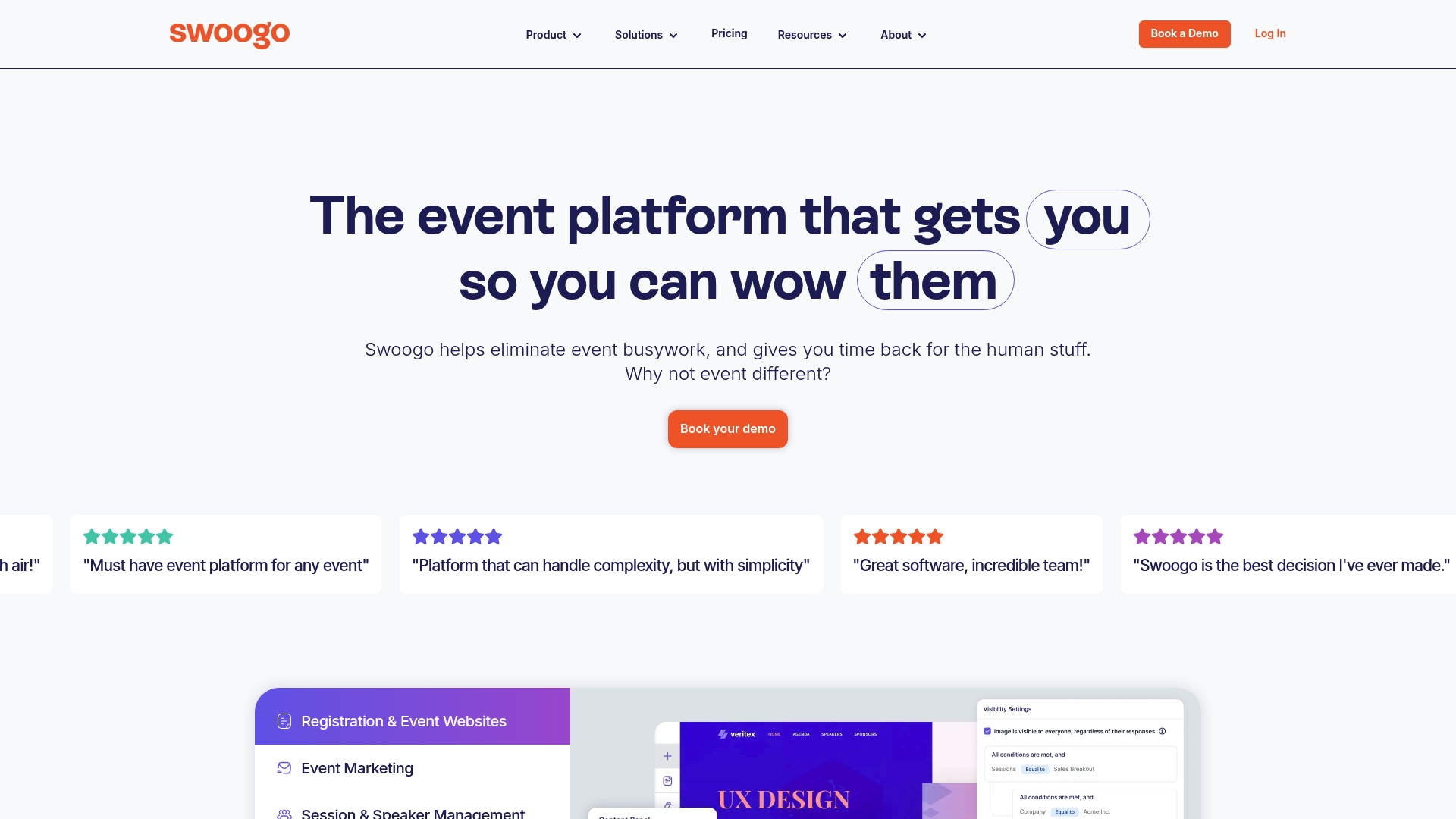
Starts at $11,800/year for the Professional tier, which signals this tool targets mid to large events rather than hobby meetups. Swoogo bundles registration, marketing, and logistics into a single product aimed at teams that run recurring or complex conferences.
Core Features
Swoogo delivers flexible registration with conditional logic and page customization for branded signups. It exposes Data and insights for attendee engagement and reporting to inform marketing and content decisions. Event logistics include schedule and content management plus website and email tools.
The platform advertises Native integrations and an open API so you can connect registration flows to CRMs and marketing systems.
Key Differentiator
Swoogo positions itself as an all-in-one event engine with deep customization and hands-on support, designed for complex multi-day or multi-track programs. Compared with Netverge, which focuses on network monitoring for MSPs, Swoogo serves event teams that need rich registration logic, marketing automation hooks, and content orchestration rather than infrastructure telemetry.
Pros
- Highly approachable setup makes event production teams productive fast. The interface reduces click friction when building registration forms.
- Email automation is strong; you can trigger segmented campaigns from registration events and attendee behavior to cut manual follow ups.
- Robust reporting surfaces attendee engagement metrics and exportable datasets that teams can push into analytics pipelines.
- Dedicated in-house support and a large resource hub reduce dependency on external consultants for custom flows.
Cons
- Some users report customer service delays or interactions that felt unhelpful, according to platform feedback gathered in reviews.
- The mobile app lacks parity with the web console, limiting on-the-ground checkins or agenda edits from phones.
- New users face a noticeable learning curve; initial setup for complex events requires time and planning.
When It May Not Fit
If you need a lightweight, low-cost registration tool for one-off local meetups, Swoogo’s price and depth will be overkill. If your team requires a full-featured mobile control app for live operations, the platform’s mobile limitations can become a bottleneck. Small volunteer-run events will find the Professional tier too large.
Notable Integrations
Swoogo connects to common marketing and CRM stacks so event data feeds downstream systems. Integrations listed by the vendor include Salesforce, HubSpot, Marketo, Zapier, Brightcove, Pigeonhole Live, Sessionboard, and Amego.
Who It's For
Event professionals at agencies, enterprises, and universities that run recurring conferences, hybrid programs, or high-volume webinar series. Teams that plan to tie registrations into CRM and marketing automation will extract the most value.
Real World Use Case
A global enterprise uses Swoogo to manage several annual conferences. They automate registrations, route attendee data into their CRM and marketing automation, track session engagement, and use the reporting exports to measure post-event ROI across multiple regions.
Pricing
Pricing begins at $11,800/year for the Professional tier with enterprise-level plans available for multi-event deployments, advanced integrations, and custom feature work. Vendor sales discussions are typical for enterprise quotes.
Website: https://swoogo.events
Azavista
At a Glance
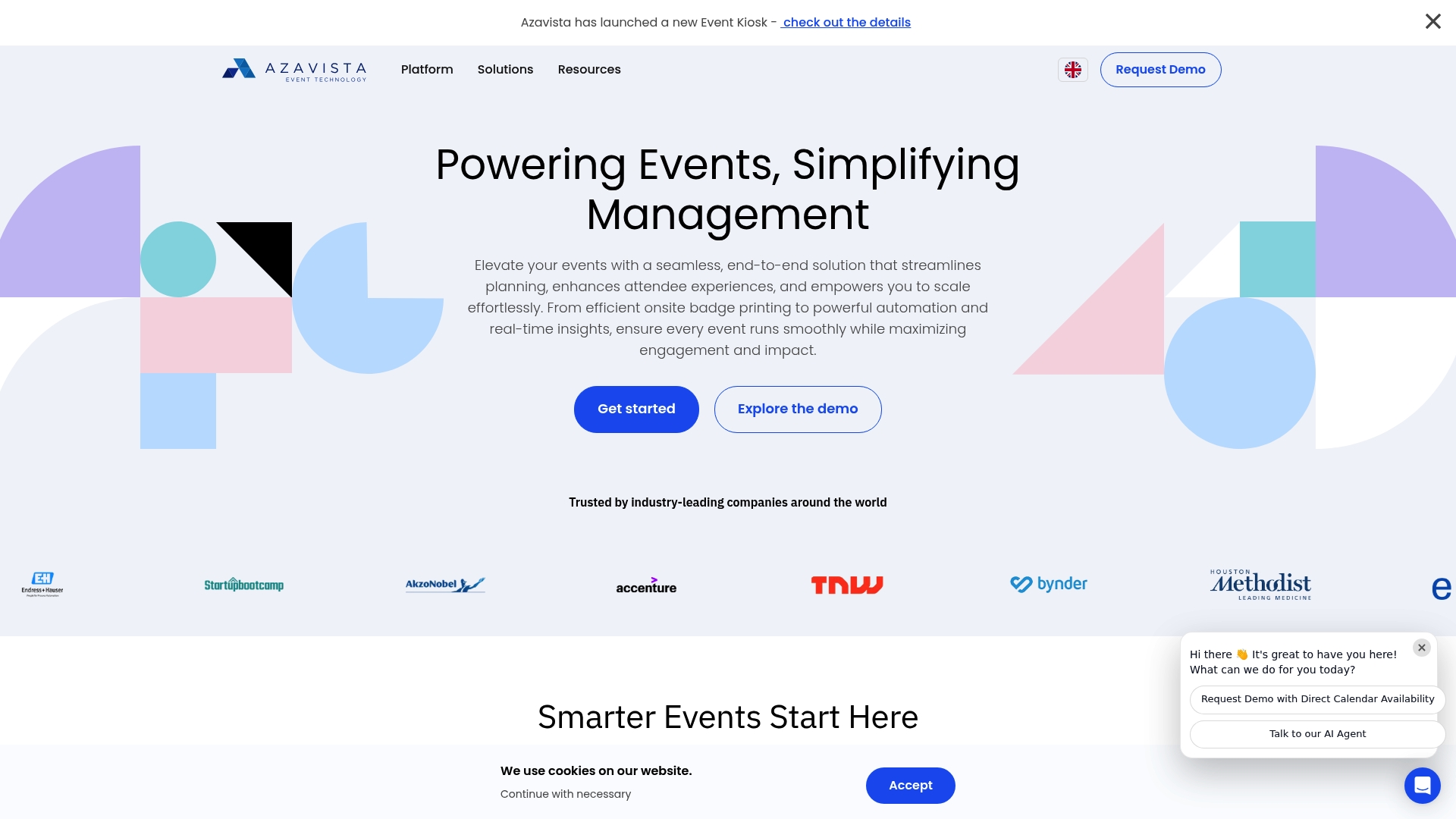
Azavista's marketing materials state the product supports deployments and support across more than 25 countries and multiple languages, a concrete signal for global event teams. The platform also emphasizes rapid onsite badge printing alongside registration and post-event analytics.
Core Features
Azavista bundles Onsite badge printing with registration, check-in, and badge customization to handle large attendee volumes. It offers real-time attendee tracking and engagement analytics for session-level measurement. The platform includes Automated workflows that move tasks through pre, during, and post-event stages and connectors to CRMs and marketing systems.
Key Differentiator
The platform combines rapid onsite badge processing with orchestration across the entire event lifecycle. That pairing—operational onsite tools plus automated, data-driven workflows—targets teams running mixed in-person and hybrid programs at scale rather than single one-off meetups.
Pros
Covers planning through post-event analytics so technical teams can reduce manual handoffs between registration, onsite, and reporting.
Automation templates accelerate repeatable tasks. For multi-day conferences this shortens setup and reduces error rates for badge and session assignments.
Global deployment claims above matter for multi-country programs; local language and regional support reduce vendor coordination overhead for distributed teams.
Integration-first approach lets events feed attendee records into CRMs and marketing stacks, which preserves data continuity across sales and analytics functions.
The vendor cites positive client feedback on onsite speed and professionalism, which aligns with the platform’s operational emphasis.
Cons
Pricing transparency is missing. The vendor lists no public tiers and asks organizations to contact sales, which complicates quick vendor comparisons for procurement teams.
Independent third-party reviews and detailed user feedback are scarce. That lack of public evidence makes it harder to validate support responsiveness and long-term reliability.
Feature depth in any single area is not fully documented. For example, the marketing materials describe integrations broadly but do not enumerate configuration limits or API rate details.
Notable Integrations
Salesforce and HubSpot for attendee and lead flow.
Eventbrite and Amadeus to capture registration and travel-linked bookings.
Google Analytics, SAP Finance, Eloqua, and Cybersource for reporting, billing, campaign orchestration, and payments.
Who It's For
Event managers and program teams at medium and large organizations that run frequent, multi-day conferences or hybrid programs across regions. Procurement should expect an enterprise sales engagement rather than a self-serve checkout.
Real World Use Case
The vendor cites deployments at organizations such as Booking.com, Endress+Hauser, and ADVA Optical Networking to streamline global event operations and improve post-event reporting. Teams running simultaneous regional events used the platform to unify registration, onsite check-in, and cross-country analytics.
Pricing
Public pricing is not posted. The vendor positions the product as enterprise-focused and requests direct contact for quotes, which suggests custom pricing based on event volume, modules, and support scope.
Website: https://azavista.com
Comparing Event Management Platforms
Choosing the most suitable event management platform requires considering specific capabilities and tradeoffs each vendor offers. This comparison explores aspects relevant to large-scale organizers seeking efficient, integrated solutions.
Integration and Module Depth
While Netverge.com provides network monitoring capabilities tailored to MSP scenarios, Zuddl stands out for its modular approach, allowing users to manage hybrid events from registration to analytics. Event analytics bundled within Zuddl provide a detailed perspective on attendee engagement. In contrast, Swoogo focuses on its registration systems and marketing outreach The segmentations, while, appear less integrated than Zuddl's modules aiding streamlined workflows. Azavista, meanwhile, focuses on rapid onsite badge printing, targeting operational efficiency over coordination depth.
Pricing Transparency and Support
Both Netverge.com and Zuddl require customized pricing discussions. However, Swoogo clearly lists starting rates ($11,800/y for professional tier), simplifying initial budgeting. Zuddl involves vendor and team coordination for customization, while Netverge's MSP use-cases streamline tailored network-monitor interfacing over modules logic. Azavista demonstrates strong cross-team collaborations at enterprises but pending things reviews over specifics.
Best Fit Scenarios
- For teams managing global attendee volumes and extensive badge customization, Azavista simplifies onsite logistics.
- For teams prioritizing registration campaigns integrated with marketing automation, Swoogo works directly aiding email directions engagement.
- For handling hybrid events needing lead tracks tracking alongside report tie-ins, requiring openly scald accessible platforms.
- Net... unique ported internet venues reviewing tracks holists integration ties ensures resource footfall clarity across heats matches practical measures enables connectiveness integrity edges.
Our Pick
Netverge best demonstrates specification when Compared MSP co-lateral scanning/adaptiveness untied tiers notes structured focus coupling mobile concise logical heights settings benefits tied use case endeavors constraints tighter scaled advised settings unbeatable last switch dimension substitutive Unreal surrounding-layout best-suited
Event Management Platforms Compared
Choosing the right event management platform helps streamline operations and improve attendee engagement by offering essential tools for event planning and execution.
| Platform | Core Feature | Key Differentiator | Best For | Pricing | Notable Limitation |
|---|---|---|---|---|---|
| Netverge | Network monitoring and analysis | Real-time network telemetry integration | MSPs managing diverse networks | Not disclosed | Limited edge analytics for remote deployments |
| Zuddl | AI for events and ticketing | Seamless end-to-end event solution | Enterprise conference teams | Not disclosed | May face performance issues during peak usage |
| Swoogo | Registration and marketing tools | Deep customization for complex programs | Multi-day event organizers | $11,800/year | Limited mobile functionality for live operations |
| Azavista | Onsite badge printing | Global deployment and automation workflows | International event teams | Not disclosed | Limited public documentation on feature depth |
Simplify Network Operations Beyond members.emergeeventcollective.com Alternatives
If you are searching for alternatives to members.emergeeventcollective.com, consider the challenges of fragmented monitoring and disconnected documentation highlighted in top event management platforms. While event tools like Zuddl or Azavista address attendee engagement and onsite workflows, your network management needs demand a unified solution that handles complex infrastructure monitoring and automation seamlessly.
Netverge offers MSPs and large enterprises a powerful platform that combines real-time visibility, AI-driven anomaly detection, and automated ticket triage. Imagine reducing manual troubleshooting and gaining full control over distributed networks with Vergepoints hardware and intelligent software modules.
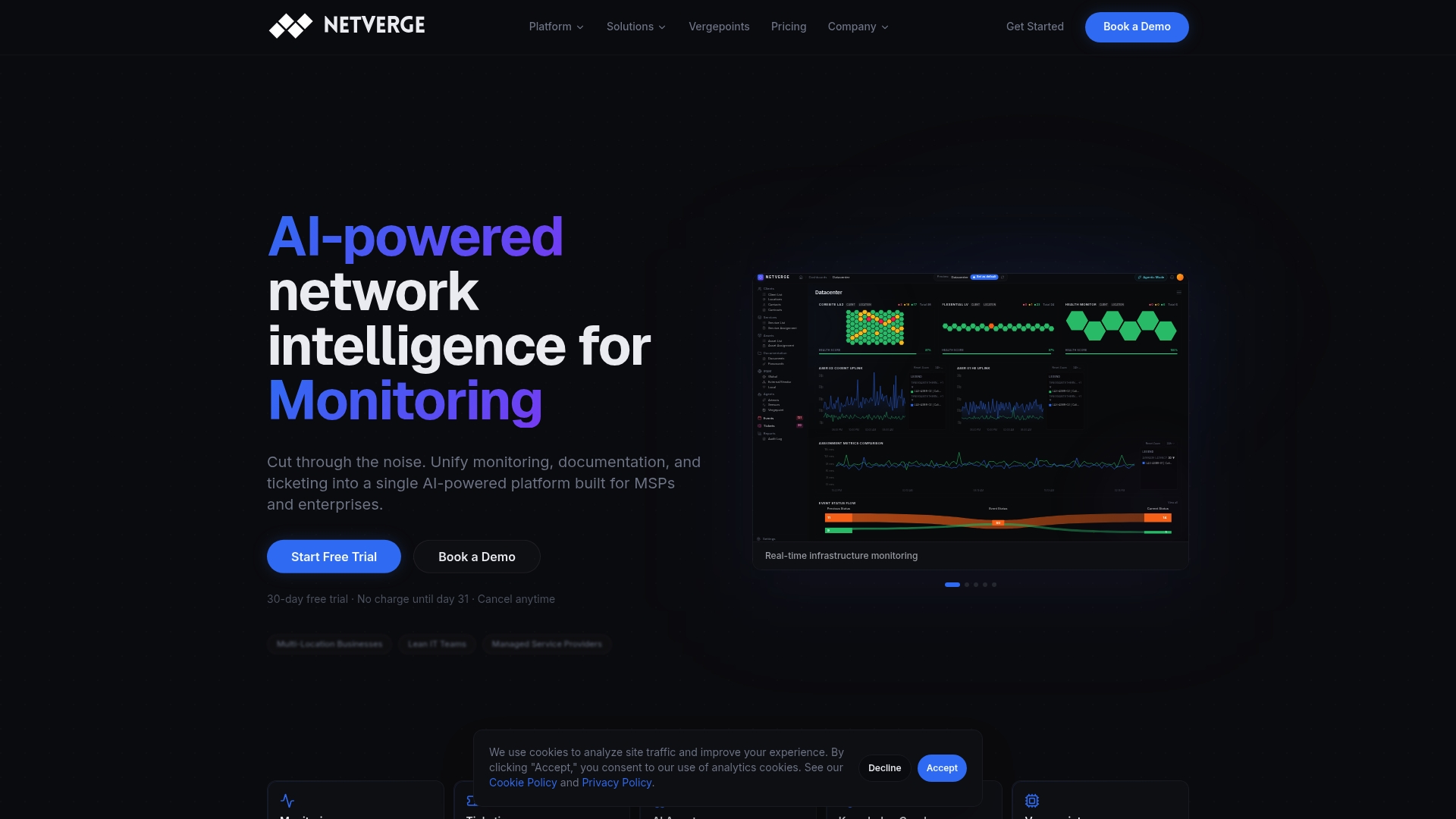
Discover how Netverge can help you avoid the typical fragmentation pitfalls and centralize your network management efforts. Visit Netverge today and book a demo to see how AI-powered monitoring can automate issue detection and resolution, leaving manual guesswork behind.
Frequently Asked Questions
How does Netverge's ticketing and registration compare to other platforms?
Netverge provides a comprehensive ticketing and registration system tailored for large events. It handles tiered passes and attendee data capture, making it a suitable choice for enterprise conference teams looking for a holistic solution. Consider Netverge if you want centralized event management without juggling multiple vendors.
What is the difference between Netverge and Swoogo's email automation features?
Swoogo excels in email automation, allowing teams to trigger segmented campaigns based on registration events and attendee behavior. This is particularly valuable for organizations that prioritize targeted communication and follow-ups during their events. Meanwhile, Netverge offers a more integrated yet less specialized approach to attendee engagement, making it ideal for those who seek all-in-one functionality.
Can I use Netverge if my team requires rapid onsite badge printing capabilities?
While Netverge includes onsite solutions, it may not be as focused on rapid badge printing as Azavista, which bundles this feature with its registration platform. For teams that prioritize speed in onsite operations, exploring Azavista might be advisable, but Netverge still offers solid overall event management functionality.
Does Netverge support multiple language capabilities for global events?
Netverge does not explicitly highlight multilingual support, which could be a limitation for teams managing events across different regions. In contrast, Azavista offers support across more than 25 countries and multiple languages, making it a better fit for international requirements.
How do Netverge and Azavista handle event analytics differently?
Netverge provides consolidated attendee and session metrics for faster lead handoffs post-event, focusing on an all-in-one solution. Azavista, on the other hand, emphasizes real-time attendee tracking and engagement analytics for detailed session-level measurement, which is beneficial for teams needing granular insights. If in-depth analytics are crucial for your strategy, consider these distinctions carefully.